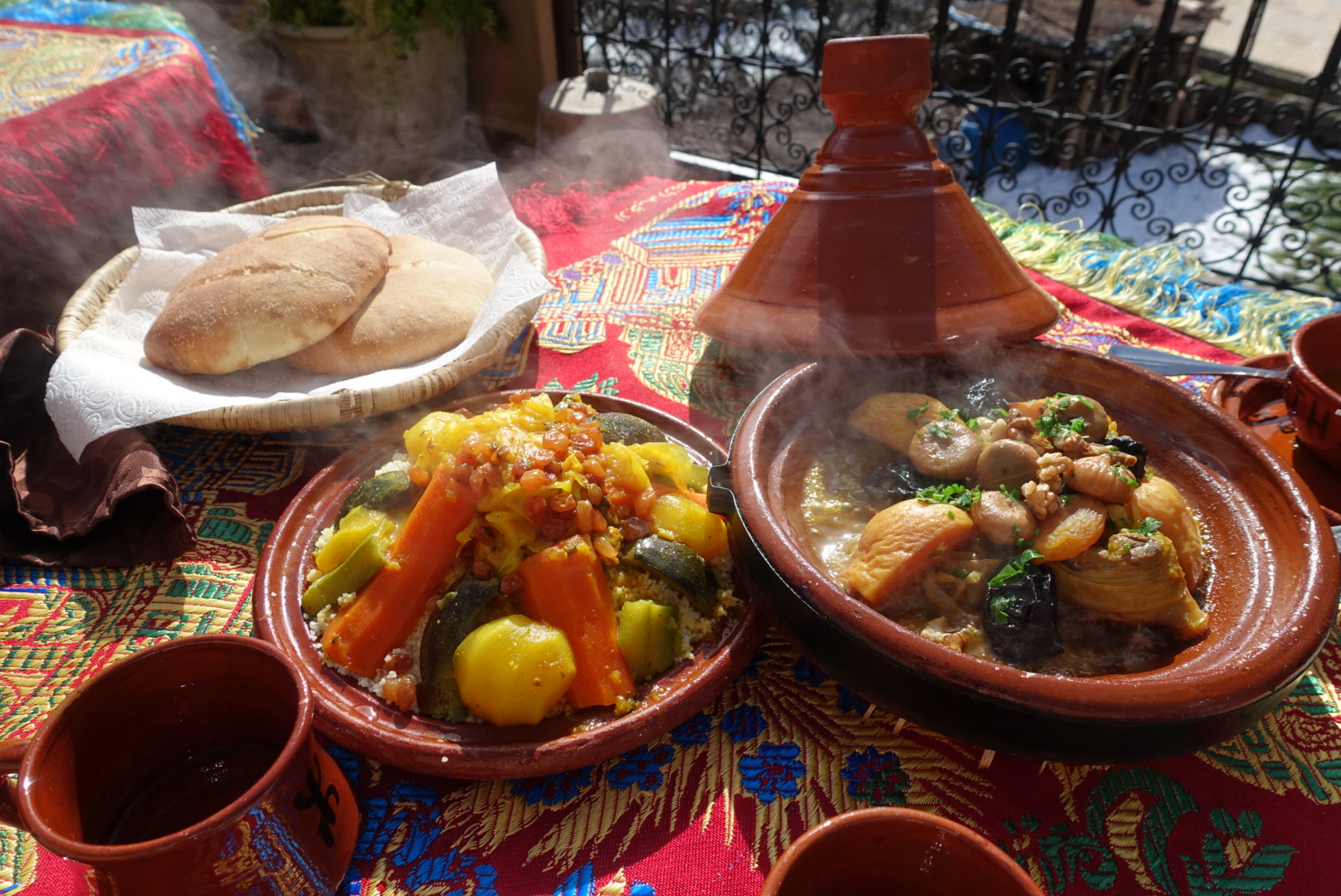
Thinking of going to Morocco this Christmas? Arguably spring and fall are favoured times to visit, but with some smart packing (temperature swings from 15-16 celsius during the day and 4-6 celsius at night) you have an added advantage of amazing snowcapped Andes views. French and Arabic are the most widely spoken languages, sometimes a bit of a struggle communicating with shops in English. Top dishes to try are the tagines (claypot), cous cous, pastilla (flaky pastry with savory or sweet fillings) and you will also be served plenty of classic Arabic mint tea and sweets.


What to wear: Sun is intense and roads are dusty, best to pack for casual attire although if you are looking to enjoy a meal at one of the luxury hotels do check if they have a dress code. No clear restrictions of female dress, but it is still advisable for ladies to be modestly covered. Most of the mosques do not allow for non-Muslims to enter (mostly phototaking of external walls only) however with appropriate hijab/headscarf they are unlikely to directly ask and dispute your religion.
Money & currency: Moroccan Dirham is a restricted currency, best to bring Euro or USD and exchange it locally. There are money changers near the luggage belts at the airport, but if you go to the departure terminal you will find ATM machines and exchange facilities operated by local banks that have a better rate. Unfortunately most shopping is cash only, and for those who take credit cards there are many negative stories of prices retroactively revised higher. Euro is also accepted locally but an unattractive 10:1 rate.
Our route:
Marrakech (3 days, incl day trip to Two Valleys) -> Fez (2 days, incl day trip to Meknes & Volubilis) -> Chefchaouen (1 day)
Aside from these stops, Essasouira (beachside town, almost worth it to see goats climb argan trees), Casablanca & Tangier (both not much to do but have major int’l airports so might be your first stop), Ouarzazate (Sahara Desert) are also popular destinations. All the key destinations are very spread out (3-4h drives at least) although they are working on a high-speed TGV operating from Casablanca-Rabat-Tangiers that should be operational by mid-18.
During the planning process, I found it worked out cheaper to hire a guide and car for the whole journey vs separate ones for each city. The medinas (old town) of Marrakech and Fez are the most intact medieval cities of the Arab world = labyrinth. They are also mostly pedestrian/motorbike only, so don’t count on taking a taxi to drop off exactly at your desired destination. Taxis are also challenge; there is the Petit Taxi (unique colour for each city and does not cross regions) or the Grand Taxi (the driver can take as many rides as he can in the backseat & can go across cities).
<Marrakech>
Charming holiday destination for Europeans and hub for the key luxury resorts. We flew in from Madrid (CX flies direct from HK), good first stop if you want to take it slow and get over jetlag.
Food: Most selection of specialty restaurants in Morocco, many run by French. Our favourite was Terrace Des Epices which is a rooftop restaurant with DJ on Saturday lunches. Other modern options include Latitude 31 (Medi-Moroccan dining in garden), Nomad (rooftop cocktail bar), I Limoni (Italian). The 2 most expensive hotel properties La Mamounia and Royal Mansour also have a variety of restaurants onsite, can go for just tea/drinks to soak in the atmosphere (all reservation only). Other touristy options Bo & Zin, Comptoir Darna, Le Lotus, Le Yakout.


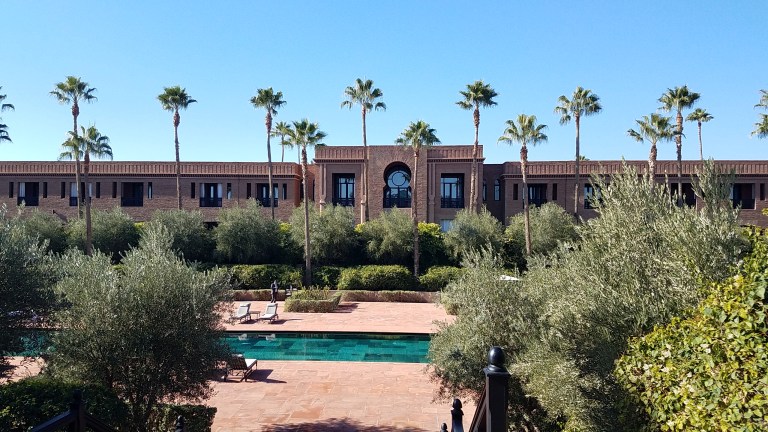
Hotels: We stayed at Palais Khum which was by far our favourite property in Morocco. It is located in a traditional courtyard within the medina, elegantly furnished with modern and traditional artwork and such an oasis from the hustle of the souks. Also only a block from the main road making it easy to get to your car.


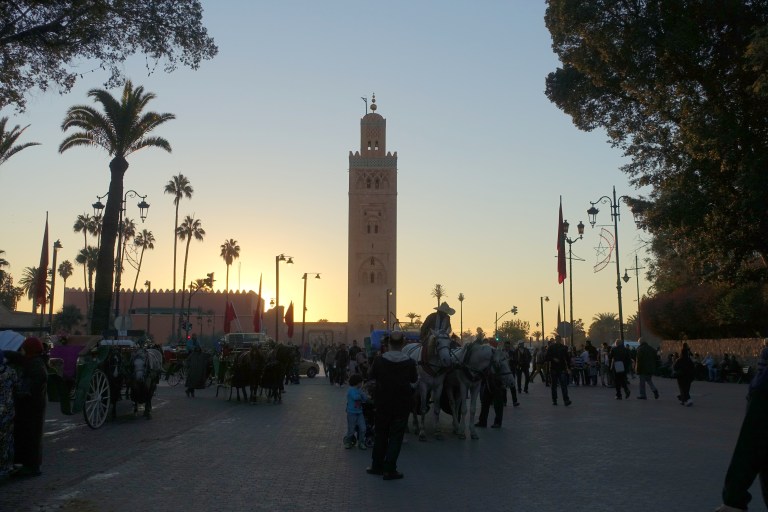
Sights: Must visit the YSL Majorelle Gardens, Bahia Palace, Koutoubia Minaret and explore the souks. We also made an unusual stop at the Museum of Photography which displayed some stunning old photographs of old Morocco. We also took a day trip to the Two Valleys (Imil & Toubkal) in the Atlas Mountains exploring the Berber villages and markets.


Shopping: Rule of thumb in Morocco is to take all shopkeeper and guide talk with a huge bucket of salt. The craft stores will all spin stories of being a Ministry of Trade endorsed co-op, Berber womens’ co-op, association for battered women etc. Whatever the context, assume your guide will get 30-40% commissions minimum and bargain for at least 1/3 of original price. They all push you counter at least once more, so give yourself a bit of leeway from your bottom line. Be aware that many of the rugs on the street stores may not be of real wool, we visited an upscale store Palais Saadiens for our Berber rug for safe of mind. There are also some nice woodcrafts, Argan oil, ceramics but I found the spices inferior to those in Dubai and Turkey.
<Fez>
Most intact medieval medina in the Arab world, be prepared for snake charmers, monkeys and magic lanterns… However I have not yet met anyone who enjoyed Fez (ambivalent at best) and did not have an excellent experience myself. In the souks, beware of people offering to give directions (they will invariably bring you to some store and force shopping or ask for tips). It’s an even deeper maze than Marrakech, but most hotels and restaurants within the medina can send you a guide if you give them a pick up location.
Food: Ruined Garden is highly reviewed for the rustic ambiance, Cafe Clock for camel burgers, but for traditional Moroccan try Riad Rcif or Dar Roumana. Degustation menu available at NUR Restaurant.


Hotels: We had a terrible Riad experience, can only say that for Fes would be worth your dollar to stay in a full service 5 star hotel. We had a nice dinner at Hotel Sahrai which is the new part of town on a hill and would highly recommend as most modern alternative in the area. If you still prefer to stay in a Riad try Riad Fes (Relais & Chateau) or Le Jardin des Biehn.
Sights: Aside from the tanneries (beware of the pungent smell!) and Bou Inania Madrasa Islamic school, most of the sights in the Medina were largely forgettable. Although you may be hassled to shop, the mosaic/wood/fabric artisan workshops are worth a look just to see the craftsmen at work. All this can be done in half a day – we also took a day trip to see Meknes (mausoleum, Bab Mansour, graineries, Royal Stables) & Volubilis (old Roman ruins).


Shopping: The souks are teeming with stores, leather from the tannery is a popular souvenir.
<Chefchaouen>
Dreamy blue city in the hills reminiscent of Santorini or Mykonos.
Food: Auberge Dardara outside of town is highly reviewed but we didn’t make the effort to leave town. Mostly streetside cafes, we stayed in our Riad for dinner.
Hotels: We stayed at the Lina Ryad & Spa, tucked away in the Medina it looked the most modern among peers. Given the small town it is impossible to avoid being woken up by the mosque’s loudspeaker call to prayer but it is cosy and reminds me of being in a family run Greek pension. We tried out their hammam – very simple, although in general Moroccan bath style is less sophisticated than their Turkish counterparts. Our friends have great reviews on the newly opened property Le Petite Chefchaouen.


Sights: Just roam the streets and take lots of photos! Entirely manageable without a guide.
 Tried & Tested